
South Africans can’t seem to go two months without a rise in petrol prices being announced. Fuel price increases are nothing new. We’ve watched the cost of our petrol fluctuate between record high increases of above the R17 per litre mark and decreases below R14 per litre over the past six to twelve months.
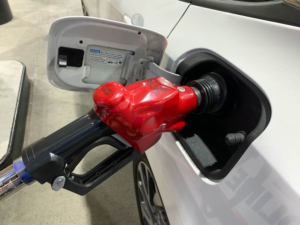
There are a number of factors that play into a changing petrol price, but the top three are as follows:
- The exchange rate between the South African Rand and US Dollar: The weaker the Rand is to the Dollar, the more likely a petrol price hike is on the horizon.
- The price of crude oil: Since oil makes up the majority of the composition of petrol, the international price of oil is unavoidably linked to our petrol price.
- Taxes and levies on fuel: Almost 40% of fuel taxes are put toward things like the Road Accident Fund and fuel levies. As of June this year, road-users are also paying a Carbon Tax whenever they fill up.
You may have picked up the vicious cycle that comes into play here: A weak economy and/or high oil prices result in rising petrol prices, which in term harms the already weak economy even further. So how does a fuel price increase affect South Africans in the day-to-day?
Your Car
When you’re shopping around for your next car, you may want to look for one that boasts a track record of making only a small or low carbon footprint as this should spare you from the worst of the impact of a petrol price increase. The stop-start technology in many newer, upper-end cars can also help you to keep from wasting petrol, especially if your daily commute puts you in the midst of congested traffic. This tech uses a computer to sense when the car is stationary and shuts down the engine at each stop to reduce fuel consumption and emissions. That makes for a very fuel-smart car.
Consumer Goods
South Africa relies heavily on road freight to transport and deliver goods to retailers. As fuel prices increase, so do freight costs. As logistics companies raise their prices to meet the latest petrol increase, there is a knock-down effect, which results in an overall higher cost on the food and other goods at your local supermarket.
Your Business
Small-business owners were already shaking in their boots when the petrol price rose in April – and they have good reason to. Aside from the increased cost to transport products, business owners have to consider how to keep the lights on when load-shedding strikes. As convenient as a generator is to a business, the cost of the fuel to keep it running is not. All these factors often force business owners to raise the prices on their products and services, which can scare off a lot of their customer base. A petrol price hike can make it harder for small businesses and start-ups to win over new customers, who are trying to avoid further financial strain in the wake of a higher petrol price.
Public Transport
There is no central transport regulator in South Africa; it’s generally left to the discretion of individual public transport operators to set their own prices. Bus companies are arguably the most vulnerable to the effects of a fuel price hike. This is especially true, if these companies have recently had to weather a strike or have had to negotiate increased labour costs.
Another factor that influences the cost of public transport is the increasing number of people choosing to walk or cycle to work, ironically as a result of these rising prices. This, of course, results in lower volumes of people using public transport, which proceeds to further raise ticket prices.
Paraffin
While a majority of South Africans rely on electricity for heating and cooking, a significant chunk of the population still resorts to illuminated paraffin as a go-to power source. Statistics South Africa’s General Household Survey from 2016 indicated that about 77% rely on paraffin for cooking. So, it’s no surprise that a petrol price hike, which raises the cost of illuminating paraffin, can make life in these households incredibly difficult. These households are vulnerable enough as it is; a fuel price increase (particularly like the one we saw going into the winter months) is another economic blow to a lot of people toeing the breadline.
Petrol Price for August
Fuel (inland) July Official August Official
95 Petrol R15.81 R15.92
93 Petrol R15.61 R15.72
0.05% Diesel (wholesale) R14.46 R14.33
